Loading...
History
A century as tenants — and the 2017 homecoming to Valle Hovin
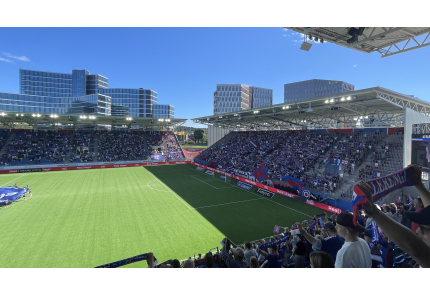
A Hundred Years Without a Home
When Vålerenga Fotball was founded in 1913, nobody could have guessed that the club would wait more than a century for a ground of its own. For decades the club's address was Bislett Stadion, the storied Oslo arena where Vålerenga's golden eras played out. In the 1950s the side nicknamed "the Norwegian Bohemians" charmed crowds with their playful attacking football, before the first league championship arrived in 1965. Then came the great side of the early 1980s, which took titles in 1981, 1983 and 1984, along with the Norwegian Cup in 1980.
The road was anything but smooth. Relegation in 1968 was followed by a further slide, and by 1970 Vålerenga had sunk all the way to the Norwegian third tier before climbing back to the top flight in 1974. From the late 1990s the club staged its home matches at Ullevaal Stadion, sharing the national team's ground. The 2005 league title and the cup wins of 1997, 2002 and 2008 were all celebrated on rented turf — a stadium of their own remained a dream.
The Road to Valle Hovin
That dream began to take shape in 2008, when the City of Oslo transferred the plot at Valle Hovin to the club for the symbolic sum of one Norwegian krone. The site sits a short walk from the neighbourhood that gave the club its name — it is hard to imagine a more fitting spot for a Vålerenga home. Even so, years of planning and political process followed before the city council gave its final approval in late 2014, and the EFTA Surveillance Authority cleared the land transfer in June 2015.
That same summer the club approved a construction budget of roughly 720 million kroner, and the foundation stone was laid on 29 July 2015 — 102 years to the day after the club's founding. Construction began in August 2015, and over the following two years the arena rose at Valle Hovin, designed with steep stands close to the pitch to preserve the intense atmosphere the club's supporters are famous for. For a fanbase that had waited generations, the hoardings could not come down fast enough.
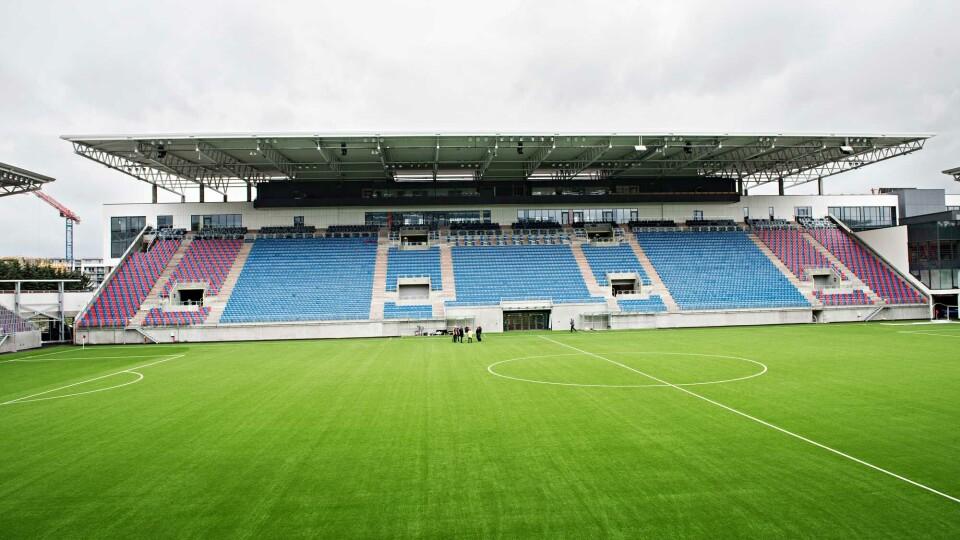
The Homecoming — September 2017
The weekend of 9–10 September 2017 became a turning point in the club's history. The honour of playing the very first match at the new stadium went to the women's team, who beat Kolbotn 2–0 in the Toppserien on Saturday 9 September. The following day, 17,011 spectators — still the ground's attendance record — packed the stands for the men's first league fixture on home soil. Sarpsborg 08 spoiled the party with a 2–1 win, but the result barely dented the occasion: after 104 years, Vålerenga finally stood on a pitch of their own.
The arena opened with room for 17,333 spectators, later adjusted down to today's 16,555 for safety reasons. In October 2017, Oslo technology company Intility bought the naming rights in a ten-year deal — reported to be worth six to seven million kroner a year — giving the ground its official name: Intility Arena.
Big Nights and New Milestones
Since 2017 the arena has been collecting milestones of its own. The clashes with arch-rivals Lillestrøm have produced Valle Hovin's most electric evenings, with the Klanen supporter group driving an atmosphere the stadium was purpose-built to amplify.
The women's team — the side that opened the arena — has turned it into one of the most successful homes in Norwegian football, winning the Toppserien in 2020, 2023 and 2024 and the Norwegian Cup in 2020, 2021, 2024 and 2025, before reaching the group stage of the UEFA Women's Champions League for the first time in the 2024–25 season. Few Norwegian grounds have witnessed so many trophies in so few years.
The Arena Today
Today Vålerenga Stadium holds 16,555 spectators for football, with room for 15,389 at international fixtures, and is home to both the men's and women's teams. A few minutes' walk from the Helsfyr metro station, and owned through Vålerenga kultur- og idrettspark, the arena works far beyond matchdays, hosting concerts, events and community activities in Oslo's east end. What generations of supporters knew only as a drawing and a dream is now a living gathering place where the club's history is written on, match by match.